
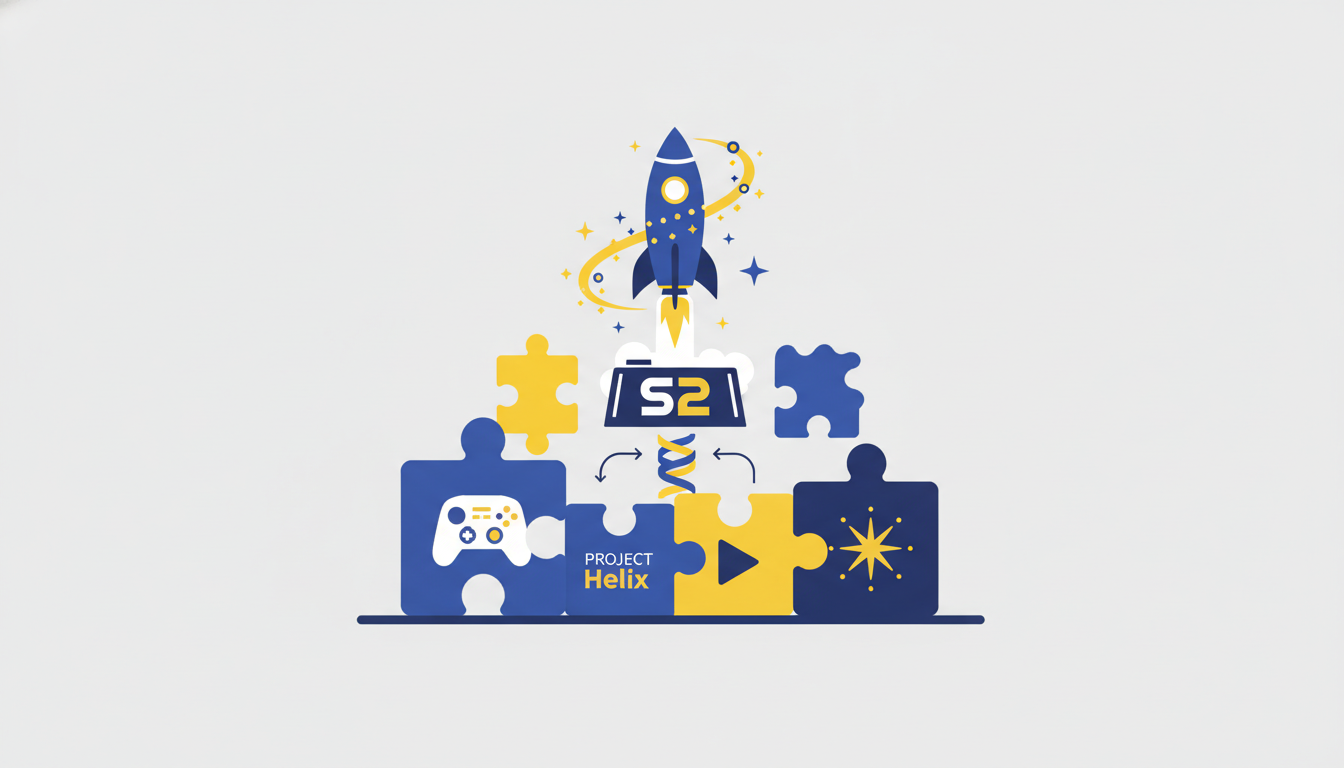
What Makes a Great Launch Game? Switch 2 Lessons for PS6 Launch Games and Project Helix
Table of Contents
- Introduction: the launch game is no longer a single disc
- What a launch game actually is in 2026
- The Switch 2 blueprint: why a steady stream beat a day-one burst
- The economics of Editions: low-risk, high-fidelity launch software
- Project Helix: when your PC library is the launch lineup
- Dev kits in 2027, consoles in 2028: the hardware timeline
- PS6 launch games: rebuilding the prestige single-player slate
- What developers are actually building right now
- Buy at launch or wait? A decision framework
- Separating confirmed next-gen facts from AI-generated fakes
- Frequently asked questions
- What we don't know yet — and where this analysis could be wrong
- The verdict: continuity beats spectacle this cycle
- References
PS6 launch games will almost certainly be a mix of cross-gen enhanced editions, backward-compatible libraries and a small number of prestige exclusives, because the Nintendo Switch 2 cycle demonstrated that a steady software stream retains players better than a single day-one burst.
>
- GDC’s State of the Game Industry report, November 2026, puts developer targeting at 10% for PS6 and 8% for Xbox Project Helix, against 81% for PC.
- Jason Ronald confirmed on 15 November 2026 that Project Helix is a console built to run your PC library.
- Sony CFO Lin Tao confirmed on 5 November 2026 that next-gen work is on schedule — the 2028 date and roughly $1,000 price are analyst projection, not confirmation.
Introduction: the launch game is no longer a single disc
The day-one exclusive has lost its primacy, and PS6 launch games will be judged on library carryover and upgrade fidelity rather than on a single hero title. That shift is not a prediction — it is the observable result of the 2025–2026 hardware cycle, where digital storefronts and multi-generation compatibility turned the console launch lineup into a question of continuity. Buyers no longer walk up to an empty shelf, which means a day-one exclusive now competes against a catalogue the buyer already owns.
The timing matters. The Nintendo Switch 2 has now run a full year of staggered releases rather than a front-loaded launch month; Microsoft publicly discussed Project Helix on 15 November 2026; and Sony reconfirmed next-gen progress on 5 November 2026. This article defines what a modern launch game actually is, works through the Switch 2 evidence, examines Microsoft’s library-first plan and Sony’s likely pivot, grounds all of it in the GDC developer-targeting data, and closes with a buy-or-wait framework and a leak-verification checklist for next-gen backward compatibility claims you will see circulating over the next two years.
About this analysis — Written by the TrueOrGame editorial desk, 18 November 2026. Every date, figure and quotation below is traced to a named, dated source. Where a claim is rumour or analyst projection, it is labelled in line rather than reported as fact, consistent with the accuracy and disclosure standards proposed in the Society of Professional Journalists’ code-of-ethics revisions for the AI age, covered by Harvard’s Nieman Journalism Lab in August 2026.
TrueOrGame – Video Game News, Leaks, Reviews & Guides
Transparency note — No platform holder supplied materials, review hardware or funding for this piece. That distinction shapes how we weight evidence: research on funding-related bias in published studies, published in International Gambling Studies in 2026, indicates that parties with a commercial interest in an outcome report it differently. Consequently, first-party statements are treated as positioning, analyst forecasts as modelling, and only dated on-the-record confirmations as confirmed.
What a launch game actually is in 2026
A modern console launch game is any title that demonstrates new hardware’s capability inside the launch window, runs stably from day one without a corrective patch, and gives buyers a concrete reason to move platforms. A launch title ships on day one. A launch-window game ships inside roughly the first six months. Coverage routinely conflates the two, which inflates how strong a launch slate looks.
That distinction barely mattered twenty years ago. Super Mario World and, later, Breath of the Wild functioned as genuine system sellers because libraries did not carry over — buying the hardware meant buying the software, and the launch game was the only thing to play. Digital storefronts, account-based entitlements and backward compatibility dismantled that logic. As a result, a day-one exclusive now has to out-argue a buyer’s existing several-hundred-game library rather than an empty shelf, and publishers know it. The commercial job of a launch game therefore changed from “give them something to play” to “prove the new box is worth the upgrade.”
Five criteria follow from that shift, and the rest of this article tests Switch 2, Project Helix and PS6 against each. Hardware demonstration still matters because fidelity is the only visible justification for a price increase — research institutions such as the MIT Media Lab continue to push rendering, interface and AI-behaviour work that eventually surfaces as a visible generational difference. Stability matters because a broken launch dominates the discourse for months. Breadth matters because a single-genre launch caps the addressable market. Upgrade paths matter because they monetise the existing library. A follow-up pipeline matters because engagement collapses without one.
Five traits of a great modern launch game
- Hardware demonstration — the game makes a visible, screenshot-level case for the new silicon
- Day-one technical stability — no launch patch required for a playable frame rate
- Breadth of audience — reaches beyond the single genre the platform already owns
- Upgrade path — existing owners get a meaningful enhanced version, not a rebadge
- Follow-up pipeline — a confirmed next release inside six months so engagement does not collapse
The Switch 2 blueprint: why a steady stream beat a day-one burst
Nintendo spread first-party, third-party and indie releases across the whole of 2026 instead of concentrating them in the launch quarter, and engagement held because the calendar gaps were filled rather than left to word of mouth. Nintendo of America COO Devon Pritchard framed the strategy directly in a 20 September 2026 interview, describing the Switch 2 as still early in its lifecycle — a positioning statement that only works if the release calendar backs it up. Because the pipeline kept arriving, the platform avoided the post-launch software drought that historically stalls hardware momentum in months four through nine.
The Switch 2’s strongest early software was not new IP at all — it was the “Switch 2 Edition” re-releases of Super Mario Bros. Wonder, Animal Crossing: New Horizons and Xenoblade Chronicles X, which carried the opening months. Nintendo then layered on 2026 first-party releases including Yoshi and the Mysterious Book, Fire Emblem: Fortune’s Weave and Pokémon Pokopia, with Netflix’s MMO Spirit Crossing arriving on 16 November 2026.
Each release did a specific job. Yoshi and the Mysterious Book and Pokémon Pokopia delivered family breadth, which widens the hardware’s addressable buyer base beyond the enthusiast core. Fire Emblem: Fortune’s Weave served as the enthusiast anchor, the title that justifies the purchase for players who had already finished the Editions. And Spirit Crossing matters disproportionately because a Netflix-published MMO treating the platform as a live-service destination signals that third parties now model the Switch 2 as a long-term revenue surface rather than a port target. That mix — breadth, depth, and third-party live service — is the structural reason the cadence held.
“still at the beginning of its journey”
— Devon Pritchard, COO, Nintendo of America, 20 September 2026
The consequence for the next cycle is direct. Because Nintendo demonstrated that a sustained pipeline sustains hardware sales well past the launch quarter, Sony and Microsoft are structuring their own launch windows around continuity rather than a single hero exclusive. Measured against the pre-Switch 2 baseline of top games of 2025, the difference is one of distribution rather than quality: the same volume of software, released across twelve months instead of two, produced a materially better retention curve. That lesson is cheap to copy, which is why both remaining platform holders appear to be copying it.
Switch 2’s 2026 release cadence, in order
- Switch 2 Editions of existing hits carry the opening months with enhanced performance versions
- First-party family titles arrive mid-year: Yoshi and the Mysterious Book, Pokémon Pokopia
- Enthusiast anchor lands next: Fire Emblem: Fortune’s Weave
- Third-party live service closes the year: Netflix’s Spirit Crossing MMO, 16 November 2026
- Pritchard’s 20 September 2026 framing signals the pipeline continues into 2027
The economics of Editions: low-risk, high-fidelity launch software
Publishers ship enhanced editions instead of ground-up exclusives at launch because new-IP development risk peaks precisely when the install base is at zero. A new AAA project greenlit for a launch window commits eight or nine figures of budget against a hardware audience that does not yet exist, and that spend cannot be recouped if the console underperforms. An enhanced edition inverts the equation: the development cost is a fraction of a new title, the asset base is already built and tested, and the audience has already proven it will pay for that specific game. Therefore the enhanced edition is the rational launch product, not a cynical one.
Nintendo’s three headline Editions illustrate both the upside and the limits. Super Mario Bros. Wonder benefited most visibly, because a high-framerate, higher-resolution presentation suits a game built on precise 2D movement. Animal Crossing: New Horizons gained from the Switch 2’s performance headroom in a title whose original hardware struggled with populated islands and online visits. Xenoblade Chronicles X sits furthest from a must-rebuy, because an upscaled open-world RPG delivers a cleaner image without changing how the game plays. Nintendo has not published a uniform specification for what each Edition upgrade includes, so buyers should check the individual title rather than assume parity across the range.
Applied forward, the same logic means a cross-gen enhanced release of an established mega-title is a more probable next-gen launch anchor than an unannounced new exclusive. Grand Theft Auto VI is the obvious candidate on scale alone — see our GTA 6 release date reporting for what is confirmed versus rumoured there — though neither Rockstar nor Take-Two has announced any next-generation version, and we are describing a commercial pattern rather than a known plan.
| Title | Original platform | Switch 2 Edition benefit | Worth a re-buy? |
|---|---|---|---|
| Super Mario Bros. Wonder | Nintendo Switch | Enhanced performance version | Strongest case of the three |
| Animal Crossing: New Horizons | Nintendo Switch | Enhanced performance version | Yes for active players |
| Xenoblade Chronicles X | Wii U, then Switch | Enhanced performance version | Marginal unless unplayed |
Specific resolution and frame-rate figures per Edition are not stated in Nintendo’s public materials covered here.
Project Helix: when your PC library is the launch lineup
Project Helix is Microsoft’s next-generation Xbox, discussed publicly in the Xbox 25th Anniversary magazine published on 15 November 2026. Jason Ronald, Xbox’s VP of Next Generation, described it as a dedicated console that also runs games from a player’s PC library, with deep graphical customisability and support for up to four generations of Xbox backward compatibility. It is unreleased and undated. Alpha development kits are scheduled to reach studios in 2027.
Ronald drew a specific distinction that changes how the launch slate should be read: Helix is a console capable of playing PC games, not a PC that plays console games. The difference is not semantic. A console-first device carries a fixed hardware target, a certification process and a living-room interface, which means developers still ship a known configuration rather than a spectrum of PC builds. Layering native PC-library access on top of that fixed target means day-one software volume is inherited rather than commissioned. It also raises an expectation console players have not previously held — graphical settings control — because that is what arrives with the PC library.
The strategic logic becomes clear once the developer data is attached. Because 81% of developers build for PC, according to GDC’s State of the Game Industry report published in November 2026, native PC support converts effectively every major PC release into a potential Helix launch game. Microsoft can therefore field thousands of day-one titles without funding a single new exclusive, and the four-generation compatibility commitment extends that further into the back catalogue. The trade-off deserves stating plainly, though: a library is not a showcase. Carryover software was built for older silicon, so no amount of it demonstrates what the new hardware can do that the old one could not. Microsoft is optimising for breadth and retention at the cost of the generational “look at this” moment — a defensible choice commercially, and a real weakness against criterion one.
Best multiplayer games with deep storylines Archives – TrueOrGame
“designed to be a console that is also capable of playing games from your PC”
— Jason Ronald, VP of Next Generation, Xbox, Xbox 25th Anniversary magazine, 15 November 2026
Dev kits in 2027, consoles in 2028: the hardware timeline
As of 18 November 2026, neither Sony nor Microsoft has confirmed a release date or a price for its next-generation console. What is on the record is narrower: Sony CFO Lin Tao stated on 5 November 2026 that PS6 work is progressing as scheduled and that the company will make solid progress preparing the next-generation platform in the coming fiscal year, and Microsoft’s Project Helix alpha dev kits are scheduled to reach studios in 2027. Everything beyond those two items is projection.
The widely repeated 2028 launch window and the roughly $1,000 price figure come from analyst modelling — Ampere Analysis among others — rather than from either company. The causal chain behind the price estimate is straightforward: elevated memory and component costs raise bill-of-materials cost per unit, which pushes retail pricing upward unless the manufacturer absorbs the margin. That in turn increases the commercial importance of cheap enhanced editions at launch, because a buyer who has just spent a four-figure sum on hardware resists paying full price again for games they own. The same cost pressure is already visible in software pricing debates, which we examined in the $100 price-tag question. Before committing money to any pre-order based on these numbers, note that the Federal Trade Commission enforces truthfulness standards in advertising, and that performance or price claims about unreleased hardware carry no such backing until a platform holder makes them officially.
| Claim | Status | Source / date |
|---|---|---|
| PS6 development progressing as scheduled | Confirmed | Sony CFO Lin Tao, 5 November 2026 |
| Project Helix alpha dev kits shipping to studios in 2027 | Confirmed | Microsoft statements, November 2026 |
| 2028 retail launch for both consoles | Analyst projection | Ampere Analysis and other forecasts |
| Approx. $1,000 console price | Speculation | Analyst forecasts, component cost pressure |
| Four generations of Xbox backward compatibility | Confirmed | Xbox 25th Anniversary magazine, 15 November 2026 |
| PS6 backward compatibility with PS5 games | Not formally confirmed | No Sony announcement as of 18 November 2026 |
PS6 launch games: rebuilding the prestige single-player slate
PlayStation missed a Game of the Year nomination at The Game Awards 2026 — its first miss in 11 years — with Grand Theft Auto VI and Control Resonant taking ground Sony usually holds. The cause is identifiable rather than mysterious: Sony’s 2026 slate weighted toward multiplayer and action output rather than the cinematic single-player productions that built the brand’s critical standing. Because awards recognition functions as free marketing and as a signal to third-party partners about where prestige development belongs, losing that position carries consequences beyond the ceremony itself.
What the next-generation slate will likely contain is therefore predictable in shape even though no titles are announced: PS6 launch games are expected to combine late-PS5 projects scaled up into cross-gen releases, enhanced editions of recent hits, and a small number of true exclusives built to demonstrate the hardware. Studios are already aligning production pipelines so that late-PS5 titles scale cleanly, which is the clearest indicator of intent available. Because prestige single-player output is the commercial moat Sony spent a decade building, industry analysts expect the pivot back toward it — and that pivot does not preclude multiplayer depth, as our rundown of multiplayer games with the best storylines shows that narrative ambition and online design are not mutually exclusive.
Best Co-op Games for Couples Archives – TrueOrGame
Two titles circulate constantly in this conversation and both are unconfirmed rumour: Astro Bot 2 and a Killzone remake. Sony has announced neither, and we are aware of no dated, sourced reporting establishing either project. Treat them as speculation until one of three things happens — an appearance in a first-party showcase, a storefront listing, or a direct platform-holder statement. Anything short of that is a rumour wearing a headline. What is reliably predictable is scale on the third-party side, where publishers continue escalating production ambition; EA’s own framing of Battlefield’s record scale illustrates the trajectory that next-generation hardware is being designed to accommodate.
What developers are actually building right now
According to GDC’s State of the Game Industry report published in November 2026, 10% of surveyed developers are targeting the PlayStation 6, 8% are targeting Xbox Project Helix, and 81% are building for PC. Those three figures share the same unit and the same survey, which makes the gap between them directly comparable.
| Platform | Developers targeting it | What it implies for the launch window |
|---|---|---|
| PC | 81% | Largest talent pool; Helix inherits it natively |
| PlayStation 6 | 10% | Thin day-one pipeline; cross-gen scaling required |
| Xbox Project Helix | 8% | Library carryover substitutes for new output |
Single-digit next-generation targeting means very few studios are currently committed to day-one next-gen releases, which leaves platform holders two options: buy launch-window exclusivity outright, or rely on cross-gen scaling from existing projects. Both companies appear to be doing the second, and that constraint is the strongest practical argument that PS6 launch games will skew heavily toward scaled cross-gen releases rather than ground-up exclusives. The limitation is equally important: these are self-reported intentions from a developer survey rather than shipping commitments, so the figures understate first-party work proceeding under NDA and overstate nothing. Research on replication and measurement reliability, published in eLife in 2026, is a useful reminder that one measurement is one measurement — a single annual survey should inform the estimate, not settle it.
Buy at launch or wait? A decision framework
For most buyers, waiting roughly 12 months after launch is the better value decision. The reasoning is structural rather than cautious: launch catalogues now consist largely of enhanced editions of games you already own, and first-revision hardware carries both the highest price of the cycle and the thinnest exclusive slate. Three variables flip that recommendation. Library carryover is the first — if your existing catalogue is the thing you actually want to play, day one delivers it. Frame-rate targets are the second, because enhanced editions deliver performance upgrades immediately. Price tolerance is the third, and given that pricing is entirely unannounced, it is the variable with the least information behind it.
If this describes you, then do this
- If your library is mostly Xbox or PC and carryover matters most — Project Helix at launch is the stronger buy, because backward compatibility is its headline feature
- If you want cinematic exclusives — wait, because Sony’s prestige single-player slate historically lands in year two, not month one
- If you are chasing 60fps or 120fps targets in games you already own — buy at launch, since enhanced editions deliver that on day one
- If a roughly $1,000 outlay is a stretch — wait for the first revision and price adjustment, and treat that figure as projection rather than confirmed pricing
- If you have no current-gen console at all — wait for the holiday bundle, because launch bundles are historically the worst value of the cycle
The Switch 2 cycle supports the default position. Its strongest software arrived six to eighteen months after launch rather than at the start, which means the waiting buyer gets a cheaper console and a fuller catalogue for the same money. That is not caution; it is arithmetic.
Separating confirmed next-gen facts from AI-generated fakes
Generative tools now produce convincing fake spec sheets, mock store listings and fabricated executive quotes in minutes, which means the cost of manufacturing a plausible next-generation leak has collapsed while the cost of verifying one has not moved. The asymmetry is the whole problem: fabrication scales, verification does not. The checklist below applies two established frameworks — the CRAAP test for source credibility, documented by CASRAI, which assesses Currency, Relevance, Authority, Accuracy and Purpose; and the principle set out in a 2026 Clinical Infectious Diseases analysis of the perils of non-peer-reviewed research, that unreviewed claims carry elevated error and bias risk. An uncorroborated leak occupies roughly the same epistemic position as an unreviewed preprint, therefore independent corroboration is a requirement rather than a nicety. AI now sits on both sides of this problem: a 2026 arXiv preprint on AI-assisted peer review across research communities — and it is a preprint, not reviewed work — examines machine assistance in validating claims even as the same technology manufactures them.
A worked contrast helps. The September 2022 GTA leaks were genuine and were confirmed by the publisher within days, which is what real leaked material looks like: traceable, specific, and ultimately acknowledged by a party with something to lose. Today’s AI fabrications follow the opposite pattern — unattributed, unverifiable, and never confirmed or denied because there is nothing concrete to respond to. Our leaks coverage applies the steps below to each claim before publication.
Five-step check for any PS6 or Project Helix leak
- Trace the claim to a named original source — a dated earnings call, an official publication or a credited reporter. An unattributed screenshot is not a source.
- Check currency and authority against the CRAAP criteria: when was it published, who published it, and what do they gain from it being believed.
- Look for the detail generative tools get wrong — inconsistent fonts in UI mock-ups, impossible spec combinations, round-number pricing, and quotes with no transcript.
- Require corroboration from a second independent outlet with its own sourcing, not an aggregator repeating the first post.
- Wait for a platform-holder response. Silence is not confirmation, and a denial that addresses the specific claim carries more weight than a general dismissal.
Frequently asked questions
What makes a great console launch game?
A great launch game demonstrates the new hardware visibly, runs stably on day one, reaches beyond a single genre, offers existing owners a real upgrade, and is followed by another release within six months. The day-one exclusive lost its primacy because digital libraries and backward compatibility mean buyers arrive with hundreds of games already installed.
What games launched with the Nintendo Switch 2 and which worked best?
Switch 2’s strongest early software was its Switch 2 Editions of Super Mario Bros. Wonder, Animal Crossing: New Horizons and Xenoblade Chronicles X. The 2026 first-party calendar then added Yoshi and the Mysterious Book, Fire Emblem: Fortune’s Weave and Pokémon Pokopia, with Netflix’s MMO Spirit Crossing arriving on 16 November 2026 as the year’s notable third-party live-service addition.
What is Xbox Project Helix?
Project Helix is Microsoft’s next-generation Xbox, described in the Xbox 25th Anniversary magazine of 15 November 2026 as a dedicated console that also plays games from your PC library. It supports up to four generations of Xbox backward compatibility. It is unreleased and undated; alpha dev kits are scheduled to reach studios in 2027.
When will the PS6 release?
Sony has not announced a PS6 release date. Confirmed: CFO Lin Tao said on 5 November 2026 that next-generation work is progressing as scheduled. Projected rather than confirmed: analysts including Ampere Analysis expect a 2028 launch. The distinction matters, because the 2028 figure originates outside Sony and carries no company backing.
Will PS6 play PS5 games?
Sony has not formally confirmed PS6 backward compatibility. Studios are already building late-PS5 titles to scale into cross-gen releases, which makes PS5 support the overwhelmingly likely outcome — but likely is not confirmed. Microsoft’s four-generation compatibility commitment creates direct competitive pressure for Sony to match it publicly.
How many developers are already making games for PS6 and Project Helix?
10% of surveyed developers are targeting PS6 and 8% are targeting Project Helix, against 81% building for PC, per GDC’s State of the Game Industry report, November 2026. These are self-reported intentions rather than shipping commitments, so first-party work under NDA is almost certainly excluded.
Are Switch 2 Editions of older games really launch games?
Functionally yes — they occupied the launch window, demonstrated the hardware and drove attach rates, because publishers avoid new-IP risk before an install base exists. The honest caveat: an enhanced edition demonstrates fidelity but not new design, which is why critics do not treat them as system sellers in the traditional sense.
Why did PlayStation miss a Game of the Year nomination in 2026?
PlayStation’s 2026 slate leaned toward multiplayer and action rather than cinematic single-player, and Grand Theft Auto VI and Control Resonant took the nominations — Sony’s first miss in 11 years. The consequence is strategic: it is the clearest available argument for a prestige single-player pivot next generation.
Should I buy a next-gen console at launch or wait a year?
Wait roughly 12 months unless library carryover or frame-rate upgrades matter more to you than exclusives. Launch catalogues now consist largely of enhanced editions, the strongest software historically arrives six to eighteen months into a cycle, and first-revision hardware costs the most. Waiting therefore buys a cheaper console and a fuller catalogue.
How can I tell whether a PS6 or Project Helix leak is genuine?
Trace it to a named, dated original source, test it against currency-authority-accuracy criteria, check for the artefacts generative tools leave behind, require independent corroboration, and wait for a platform-holder response. Silence is not confirmation. A specific, targeted denial carries far more evidential weight than a general dismissal.
Will PS6 and Project Helix cost $1,000?
best crime games for PC Archives – TrueOrGame
No price has been announced by either company. The $1,000 figure is speculation built on analyst forecasts and rising memory and component costs, which raise bill-of-materials cost and therefore push retail pricing upward. Treat it as a ceiling estimate rather than a price.
What we don’t know yet — and where this analysis could be wrong
No next-generation hardware has shipped, no dev kit has been independently tested, and every date and price currently in circulation is projection rather than confirmation. This analysis rests on three evidence types, each with a known weakness. Platform-holder statements on the record are reliable as to fact but selected for effect, because companies disclose what serves them. The GDC developer survey measures self-reported intentions, which lag actual production and exclude NDA work. Analyst forecasts model component costs and historical cadence, which means they are only as good as their assumptions about memory pricing and manufacturing timing.
The strongest counter-argument deserves a fair hearing: the Switch 2 model may not transfer. Nintendo’s first-party output volume, its hardware price point and its family audience differ fundamentally from Sony’s and Microsoft’s, so a cadence that worked for a cheaper hybrid console will not automatically work for a premium home console. A single exceptional day-one exclusive could still move hardware decisively, as the history of genuine system sellers demonstrates. If Sony fields one, the carryover-first thesis in this article weakens substantially.
Open questions we will update as answers land
- Whether Sony formally commits to PS5 backward compatibility, and how far back it extends
- Whether Project Helix’s PC-library support covers all storefronts or only selected ones
- Actual retail pricing for either console, which remains entirely unannounced
- Whether any first-party exclusive is confirmed for either launch window
- Whether memory component costs ease before manufacturing ramps, which would lower the projected price
The verdict: continuity beats spectacle this cycle
Three independent lines of evidence point the same direction. The Switch 2 cycle showed a sustained pipeline outperforming a front-loaded one. Project Helix’s library-first design, as Jason Ronald described it on 15 November 2026, treats the player’s existing catalogue as the launch slate. And GDC’s November 2026 targeting figures — 10% PS6, 8% Helix, 81% PC — confirm too few studios are committed for a traditional exclusive-driven launch to be viable. Consequently, PS6 launch games and the Helix slate will be judged on carryover, upgrade quality and pipeline cadence rather than on a single hero exclusive.
The practical instruction follows. Measure the next 18 months of announcements against the five criteria set out earlier — demonstration, stability, breadth, upgrade path, follow-up pipeline — rather than against hype volume. Run the five-step verification checklist before sharing any leak, because the cost of fabricating one has collapsed. And treat every date and price in circulation as projection until a platform holder states otherwise on the record. Follow our gaming headlines for ongoing coverage as those confirmations arrive.
Read more — follow TrueOrGame’s headlines and leaks coverage for verified next-gen updates.
References
- Nieman Journalism Lab, Harvard University — The Society of Professional Journalists proposes edits to its code of ethics for the AI age (August 2026)
- International Gambling Studies, Taylor & Francis — Funding-related bias in research (2026)
- CASRAI — CRAAP test guide for evaluating source credibility
- Clinical Infectious Diseases, Oxford Academic — On the perils of non-peer-reviewed studies (advance article, 2026)
- arXiv, Cornell University — AI-assisted peer review across research communities (preprint, 2026)
- eLife — Replication success metrics (2026)
- MIT Media Lab — next-generation interactive technology research
- Federal Trade Commission — advertising truthfulness standards
- GDC State of the Game Industry report, November 2026 — developer platform-targeting figures (10% PS6, 8% Project Helix, 81% PC)
- Xbox 25th Anniversary magazine, 15 November 2026 — Jason Ronald on Project Helix
- Sony earnings commentary, 5 November 2026 — CFO Lin Tao on next-generation progress
- Nintendo of America interview, 20 September 2026 — COO Devon Pritchard on Switch 2 lifecycle

news via inbox
Leaks, release dates and reviews — straight to your inbox. No spam, unsubscribe any time.