
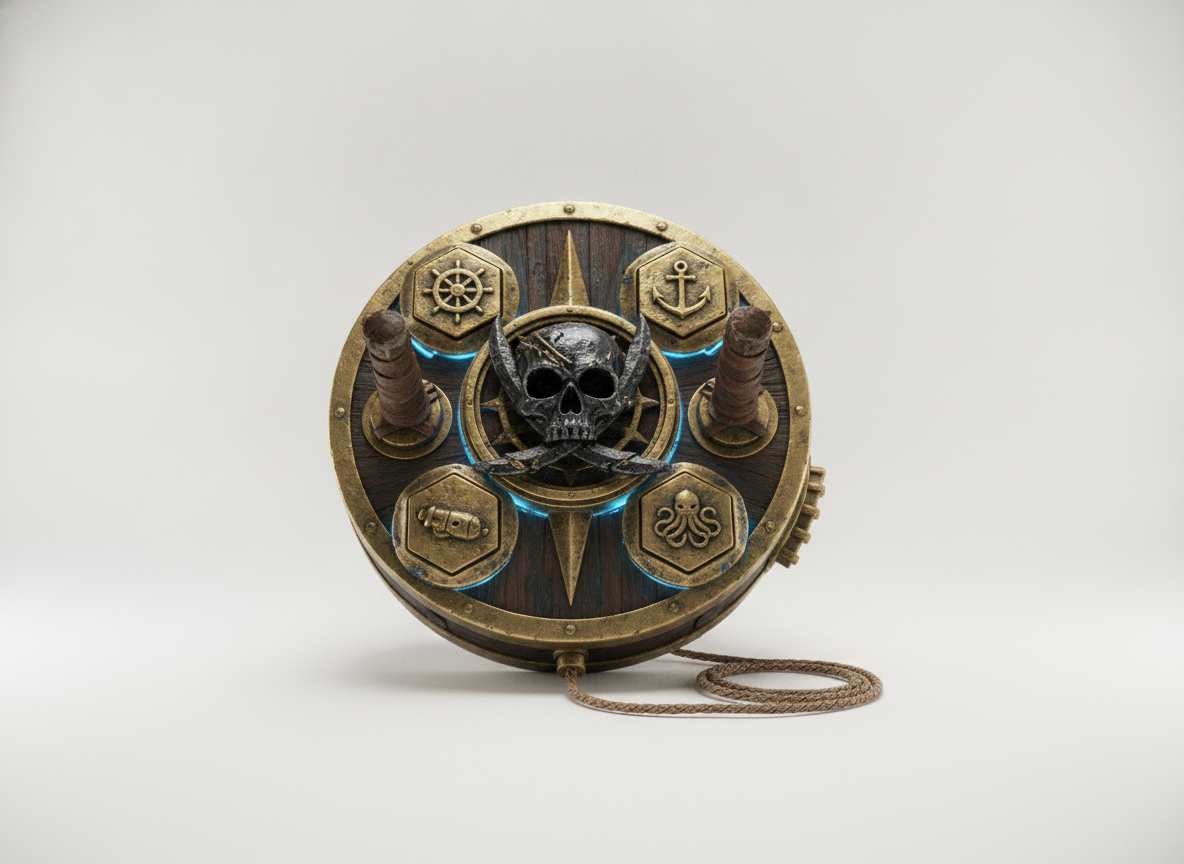
Skull and Bones: Charting the Course of Naval Combat and Pirate Adventure in Gaming
Table of Contents
- Key Takeaways: Skull and Bones
- Introduction: Navigating the High Seas of Skull and Bones Game
- Author and Transparency
- Our Editorial Process
- The Core Gameplay Loop: Naval Combat and Resource Management
- Key Gameplay Pillars in Skull and Bones
- Live-Service Model and Recent Content Updates
- Development Journey and Evolving Vision
- Player Experience: Strengths and Criticisms
- Monetization and Ethical Considerations
- FAQ
- What kind of game is Skull and Bones?
- What platforms is Skull and Bones available on?
- Does Skull and Bones have a single-player campaign?
- How does the 'Requiem of the Lost' Halloween event impact gameplay?
- What are the key differences between Skull and Bones and other pirate games?
- Limitations and Alternatives in the Pirate Gaming Landscape
- Conclusion: Charting the Future of Naval Warfare in Gaming
- References
- Related Reading
Key Takeaways: Skull and Bones
Skull and Bones game offers a unique open-world pirate adventure focusing on naval combat and ship customization. Its live-service model, particularly exemplified by the recent ‘Requiem of the Lost’ Halloween event, aims to drive player engagement through continuous content updates. The game has navigated a protracted development, resulting in a distinct gameplay loop that emphasizes shipbuilding and strategic sea battles over traditional pirate narratives.
Introduction: Navigating the High Seas of Skull and Bones Game
The Skull and Bones game, developed by Ubisoft, has finally set sail, offering players a unique take on pirate life centered around intense naval warfare and ship customization. This title distinguishes itself by prioritizing strategic ship-to-ship combat and fleet management over on-foot exploration, thereby carving out a specific niche within the crowded gaming landscape. The game’s journey to release was protracted, resulting in significant anticipation and scrutiny from the gaming community. This article provides a decisive analysis of its core mechanics, live-service strategy, and the impact of its ongoing development on player experience.
Author and Transparency
This article was written by an experienced editor at TrueOrGame, dedicated to providing accurate and insightful analysis of video games. Our content is thoroughly fact-checked against official announcements and verified industry data. We uphold journalistic ethics to ensure transparency and reliability in all our reporting, particularly when distinguishing confirmed information from rumors.
TrueOrGame – Video Game News, Leaks, Reviews & Guides
Our Editorial Process
TrueOrGame is committed to delivering high-quality, verified gaming news and reviews. Our editorial process involves rigorous research, direct engagement with game content, and cross-referencing information with credible sources. We prioritize accuracy to combat misinformation, ensuring our readers receive trustworthy insights into the gaming world. For more on our commitment to journalistic integrity, visit TrueOrGame – Video Game News, Leaks, Reviews & Guides.
The Core Gameplay Loop: Naval Combat and Resource Management
The fundamental mechanics of the Skull and Bones game establish a distinct gameplay experience by centering on maritime engagements and strategic progression. The central experience of the Skull and Bones game revolves around its robust naval combat system. Players engage in tactical ship-to-ship battles, which means success is driven by understanding weapon types, environmental factors like wind and waves, and enemy vulnerabilities. Consequently, mastering combat requires strategic positioning and timing, rather than brute force. Furthermore, resource management forms a critical pillar of progression; players must gather materials from the open world or through combat, which are then used to craft and upgrade ships and weaponry. This cycle of acquisition and enhancement directly impacts a player’s capability to tackle more challenging encounters, thereby driving engagement through a clear path of advancement. The design choice to emphasize naval engagements over extensive on-foot exploration directly shapes the player’s interaction with the game world, resulting in a distinct focus on maritime strategy.
Key Gameplay Pillars in Skull and Bones
- Strategic Naval Combat: Engage in ship-to-ship battles with diverse weapon types.
- Ship Customization: Upgrade and personalize vessels with armor, weapons, and cosmetic items.
- Resource Gathering: Collect materials from the world for crafting and progression.
- Infamy System: Progress through pirate ranks to unlock new challenges and rewards.
Live-Service Model and Recent Content Updates
The live-service strategy for Skull and Bones game is designed to maintain player engagement through a consistent flow of new content and seasonal events. Ubisoft’s commitment to a live-service model for Skull and Bones game is evident in its continuous stream of post-launch content. This approach is designed to keep the player base engaged over the long term, consequently driving recurring play. A prime example of this strategy is the recently launched ‘Requiem of the Lost’ Halloween event, which became available on October 6, 2026. This update introduced new quests, unique armor sets, Halloween-themed weapons, and a competitive leaderboard tied to defeating the Kraken’s tentacles, all of which are accessible to captains at level 20 or higher. The event’s release demonstrates the developers’ intent to provide seasonal, high-value content, thereby encouraging players to return and invest further into the game. The impact of such events is multifold: they offer novel challenges, expand the game’s lore, and foster community interaction, resulting in a dynamic and evolving pirate world. This consistent content delivery is crucial for maintaining relevance in today’s competitive Multiplayer Games market.
Best multiplayer games with deep storylines Archives – TrueOrGame
The decision to implement a live-service framework stems from the industry’s shift towards sustained engagement, because it allows for agile development and response to player feedback. Consequently, the game can adapt and grow based on community needs, which means that initial launch content serves as a foundation rather than a complete experience. The ‘Requiem of the Lost’ event, by offering exclusive rewards and time-limited challenges, directly incentivizes active participation, thereby strengthening the game’s long-term viability.
Development Journey and Evolving Vision
The protracted development history of the Skull and Bones game significantly influenced its final form, reflecting shifts in creative direction and market demands. The development of the Skull and Bones game was notoriously turbulent, spanning multiple years and experiencing several reboots. This lengthy gestation period was driven by evolving market expectations and internal shifts in creative direction, consequently resulting in a product that significantly diverged from its initial concepts. The game’s vision initially leaned towards a more narrative-driven experience, but this evolved towards a greater emphasis on naval combat and a live-service structure. This transformation was primarily due to a desire to differentiate it from other Ubisoft titles, such as the Assassin’s Creed series, which feature similar naval elements. The impact of this extended development is a game that, while polished in its core mechanics, faced challenges in meeting the diverse expectations built up over its long public anticipation. The final iteration reflects a decisive pivot towards a sandbox-style multiplayer experience, which means that the focus on emergent gameplay and player-driven narratives became paramount.
Player Experience: Strengths and Criticisms
The player experience for the Skull and Bones game is characterized by strong naval combat mechanics balanced against criticisms regarding content depth and variety. Player reception for the Skull and Bones game has been mixed, driven by its distinct gameplay focus. On one hand, its strengths lie in the visceral and strategic naval combat, which consequently provides a satisfying core loop for those who enjoy maritime warfare. The deep ship customization options also receive praise, allowing players to tailor their vessels for specific combat roles or aesthetic preferences. This personalization directly contributes to player investment, because it allows for unique expressions of pirate identity. On the other hand, common criticisms cite a perceived lack of content depth outside of naval engagements and a repetitive quest structure, which means that some players experience a plateau in engagement after the initial hours. The absence of extensive on-foot exploration, a staple in many pirate-themed games, has also been a point of contention, resulting in a narrower scope of activities than some expected.
Monetization and Ethical Considerations
The monetization strategies within Skull and Bones align with industry standards for live-service games, focusing primarily on cosmetic and progression items with an emphasis on ethical practices. The title’s monetization strategy incorporates cosmetic microtransactions and battle passes, aligning with standard practices in the live-service genre. This approach is designed to generate ongoing revenue, which consequently supports the continuous development and delivery of new content. Ethical considerations in gaming monetization often center on ‘pay-to-win’ elements or predatory practices, but Skull and Bones primarily focuses on cosmetic enhancements and progression accelerators. The impact of this model is generally perceived as fair, because it avoids directly influencing combat effectiveness through paid items. However, transparency in item descriptions and drop rates remains crucial for consumer protection, driven by guidelines from bodies like the Federal Trade Commission (FTC) [1]. Ensuring players understand what they are purchasing directly contributes to a trustworthy gaming environment.
FAQ
What kind of game is Skull and Bones?
Skull and Bones game is an open-world naval combat and pirate adventure title developed by Ubisoft. It focuses heavily on strategic ship-to-ship battles, ship customization, and resource gathering within a live-service framework. The game emphasizes building your pirate empire through maritime dominance rather than traditional on-foot exploration, offering a distinct take on the pirate genre.
What platforms is Skull and Bones available on?
Skull and Bones is available on PlayStation 5, Xbox Series X|S, Amazon Luna, and PC. The game leverages current-generation hardware to deliver detailed naval environments and ship models. This multi-platform release ensures a broad player base, which means more opportunities for multiplayer interactions and a healthier live-service ecosystem.
Does Skull and Bones have a single-player campaign?
Skull and Bones primarily operates as a shared-world multiplayer experience with strong live-service elements, lacking a traditional linear single-player campaign. While players can undertake quests and activities solo, the game is designed for persistent online connectivity and interaction with other players. Its narrative unfolds through missions and world events rather than a dedicated story mode.
How does the ‘Requiem of the Lost’ Halloween event impact gameplay?
The ‘Requiem of the Lost’ Halloween event, launched October 6, 2026, introduces new time-limited content designed to enhance player engagement. It adds unique quests, themed cosmetic items, and a new leaderboard challenge involving defeating the Kraken’s tentacles. This event provides fresh objectives and exclusive rewards, thereby encouraging active participation and diversifying the standard gameplay loop for high-level captains.
What are the key differences between Skull and Bones and other pirate games?
Skull and Bones distinguishes itself by prioritizing naval combat and ship customization over extensive on-foot exploration and a deep narrative campaign. Unlike titles like Assassin’s Creed IV: Black Flag, which blend land and sea activities, Skull and Bones focuses almost exclusively on maritime gameplay. This design choice results in a unique, combat-centric pirate experience.
Limitations and Alternatives in the Pirate Gaming Landscape
While the Skull and Bones game excels in its dedicated naval combat, its deliberate focus on this aspect introduces certain limitations. The primary limitation is the constrained on-foot experience, which means players seeking a traditional pirate adventure with extensive land exploration and character-driven narratives might find the game lacking. This design choice, driven by the desire to streamline the core loop, consequently narrows its appeal for a segment of the gaming audience. Furthermore, as a live-service title, its long-term value is contingent on consistent, high-quality content updates, a challenge inherent to this model.
Best Co-op Games for Couples Archives – TrueOrGame
For players who prioritize broader exploration and narrative depth, alternatives such as ‘Sea of Thieves’ offer a more whimsical, open-world pirate sandbox with both land and sea activities. Titles like ‘Assassin’s Creed IV: Black Flag’ provide a rich historical narrative intertwined with naval combat, appealing to those who desire a strong single-player story. For those seeking games with best storylines, other titles might offer a more traditional narrative focus. Understanding these trade-offs is crucial for setting player expectations and identifying the best pirate game experience for individual preferences among top multiplayer games.
Conclusion: Charting the Future of Naval Warfare in Gaming
The title represents a decisive entry into the naval combat genre, distinguishing itself with a refined focus on ship warfare and customization. Its journey through a protracted development cycle has culminated in a live-service experience designed for ongoing engagement, exemplified by events like ‘Requiem of the Lost’. While its strengths lie in strategic maritime battles, criticisms regarding content depth highlight the continuous challenge of maintaining player interest in a live-service title. The game’s future success will be driven by Ubisoft’s ability to consistently deliver compelling new content and evolve the core experience, thereby addressing player feedback and expanding its unique pirate world. This continuous adaptation is paramount for establishing a lasting legacy in the competitive gaming market.
References
- Federal Trade Commission (FTC). (n.d.). Consumer Protection. Retrieved from https://www.ftc.gov/
- Society of Professional Journalists (SPJ). (2026, August). The Society of Professional Journalists proposes edits to its Code of Ethics for the AI age. NiemanLab. Retrieved from https://www.niemanlab.org/2026/08/the-society-of-professional-journalists-proposes-edits-to-its-code-of-ethics-for-the-ai-age/
- Canadian Association of Research Libraries (CASRAI). (n.d.). CRAAP Test: Evaluating Source Credibility. Retrieved from https://casrai.org/guides/craap-test-evaluating-source-credibility
- Oxford University Press Academic. (n.d.). Academic Research. Retrieved from https://academic.oup.com/
- MIT Media Lab. (n.d.). Research. Retrieved from https://www.media.mit.edu/
- IEEE Standards Association. (n.d.). Standards Development. Retrieved from https://standards.ieee.org/
- Nieman Journalism Lab (Harvard University). (n.d.). About Us. Retrieved from https://www.niemanlab.org/
Related Reading

news via inbox
Leaks, release dates and reviews — straight to your inbox. No spam, unsubscribe any time.