Table of Contents
- Core Gameplay Mechanics: How Ready or Not vs. SWAT 4 Differs
- Player Movement and Interaction
- Squad AI and Command System
- Realism and Immersion in Ready or Not vs. SWAT 4
- Ballistics and Weapon Handling
- Environmental Detail and Atmosphere
- Mission Design and Replayability: Ready or Not vs. SWAT 4
- Objective Variety and Scenario Complexity
- Modding Community and Longevity
- Multiplayer and Co-op Experience: Ready or Not vs. SWAT 4
- Graphics, Sound, and Performance: Ready or Not vs. SWAT 4
- Visual Fidelity and Art Direction
- Audio Design and Immersion
- The Verdict: Which Reigns Supreme for Tactical Fans?
- FAQ
- Limitations and Alternatives in Tactical Gaming
- Conclusion: The Enduring Legacy of Ready or Not vs. SWAT 4
- References
Ready or Not vs. SWAT 4: A Deep Dive Comparison for Tactical Fans
Lead sections with key stat or fact
Core Gameplay Mechanics: How Ready or Not vs. SWAT 4 Differs
At the heart of any tactical shooter lies its gameplay. Ready or Not vs. SWAT 4 offers distinct approaches to player control, squad commands, and engagement protocols. Ready or Not emphasizes a more visceral, unforgiving experience, where every bullet counts and mistakes are severely punished. Its command system, while robust, may require quick decision-making under intense pressure. SWAT 4, conversely, is celebrated for its intuitive yet deep command interface, allowing players to meticulously plan entries, manage non-lethal options, and execute complex maneuvers with precision. The pacing in SWAT 4 often allows for more methodical planning, whereas Ready or Not often forces improvisation.
Player Movement and Interaction
Ready or Not introduces highly detailed movement mechanics, including granular control over weapon stance, lean, and door interaction, adding layers of realism. Players can pie corners, use mirrors, and even wedge doors. SWAT 4, while less graphically sophisticated, offers solid movement and interaction for its time, with clear prompts for actions like cuffing suspects or securing evidence. The fluidity and responsiveness of player interaction are key differentiators when comparing Ready or Not vs. SWAT 4.
Squad AI and Command System
The effectiveness of your AI squad is paramount. Ready or Not’s AI, while improved, can sometimes be inconsistent, requiring careful oversight. However, its command wheel allows for a wide array of tactical orders. SWAT 4 is widely lauded for its intelligent and responsive squad AI, which often feels like an extension of the player’s will. Its context-sensitive command menu set a standard for the genre. Academic foundational research into AI for games, such as that supported by the National Science Foundation (NSF), continually pushes the boundaries of in-game character intelligence, impacting titles like Ready or Not.
Realism and Immersion in Ready or Not vs. SWAT 4
Both games strive for realism, but their interpretations may differ. Ready or Not leans into a gritty, unflinching portrayal of modern law enforcement, with realistic ballistics, weapon handling, and a focus on non-lethal takedowns. The psychological impact of the environments and encounters is often palpable. SWAT 4, while also realistic, presents a slightly more sanitized, yet still intense, version of tactical operations. Its realism is rooted in mission design and the consequences of player actions, rather than just raw visual fidelity. The debate over which game achieves superior realism is central to any discussion of Ready or Not vs. SWAT 4.
Ballistics and Weapon Handling
Ready or Not features an advanced ballistics system, including bullet penetration and realistic damage models, making every shot critical. Weapon recoil and handling are meticulously recreated. SWAT 4, while simpler, still offers satisfying weapon feedback and a good sense of impact. The depth of weapon customization and the feel of engagement are key areas where Ready or Not may pull ahead, reflecting advancements in game design and technology. Academic research from University of Southern California (USC Games) often explores the impact of realistic game physics on player engagement, drawing from studies on player psychology and game design principles.
Environmental Detail and Atmosphere
Ready or Not excels in creating oppressive and detailed environments, from squalid apartments to active crime scenes, enhancing immersion. The sound design further amplifies the tension. SWAT 4’s environments, while dated visually, are functionally rich and contribute significantly to its tactical gameplay, offering numerous entry points and cover options. The atmospheric qualities of both games are crucial for drawing players into their respective worlds, making the comparison of Ready or Not vs. SWAT 4 in this aspect compelling.
Mission Design and Replayability: Ready or Not vs. SWAT 4
The longevity of a tactical shooter often hinges on its mission design and replayability. SWAT 4 is renowned for its diverse and intricately designed missions, each presenting unique challenges and requiring thoughtful planning. The randomized suspect and civilian placements may add significant replay value. Ready or Not offers a smaller but growing selection of highly detailed maps, with dynamic objectives and AI behavior that ensures no two playthroughs are identical. Its focus on procedural elements and varied suspect behavior may enhance its replayability. The enduring appeal of Ready or Not vs. SWAT 4 depends heavily on how well their missions hold up over time.
Objective Variety and Scenario Complexity
SWAT 4’s missions range from hostage rescues to bomb defusal, each with clear objectives and a strong narrative context. The scenarios are designed to test different tactical approaches. Ready or Not, while having similar objectives, often presents them in a more open-ended and emergent fashion, allowing for greater player agency in how they tackle the situation. The complexity of the scenarios in both games offers deep tactical challenges, a hallmark of excellent game design. The Entertainment Technology Center at Carnegie Mellon University (ETC) often researches innovative storytelling and scenario generation in interactive entertainment, with ongoing projects exploring technological advancements in gaming.
Modding Community and Longevity
SWAT 4 has a robust and active modding community that has extended its lifespan considerably, adding new maps, weapons, and gameplay tweaks. Ready or Not, being a newer title, also has a burgeoning modding scene, promising similar longevity. The ability for players to create and share content significantly boosts replayability and is a testament to the core design principles of both games. This community aspect is a key factor when discussing the long-term appeal of Ready or Not vs. SWAT 4.
Multiplayer and Co-op Experience: Ready or Not vs. SWAT 4
Tactical shooters are often best enjoyed with friends, and both games offer distinct multiplayer experiences. Ready or Not shines in its cooperative mode, where up to five players can tackle missions together, emphasizing communication and coordinated tactics. The game’s difficulty scales effectively, making teamwork essential. SWAT 4 also features a strong co-op mode, allowing players to coordinate tactical entries and manage threats. While its competitive multiplayer is less active today, its co-op remains a highlight. The social aspect of playing Ready or Not vs. SWAT 4 with a squad often elevates the experience. For those seeking the best multiplayer games, both titles offer compelling co-op options, as discussed in various Multiplayer Games Archives.
Graphics, Sound, and Performance: Ready or Not vs. SWAT 4
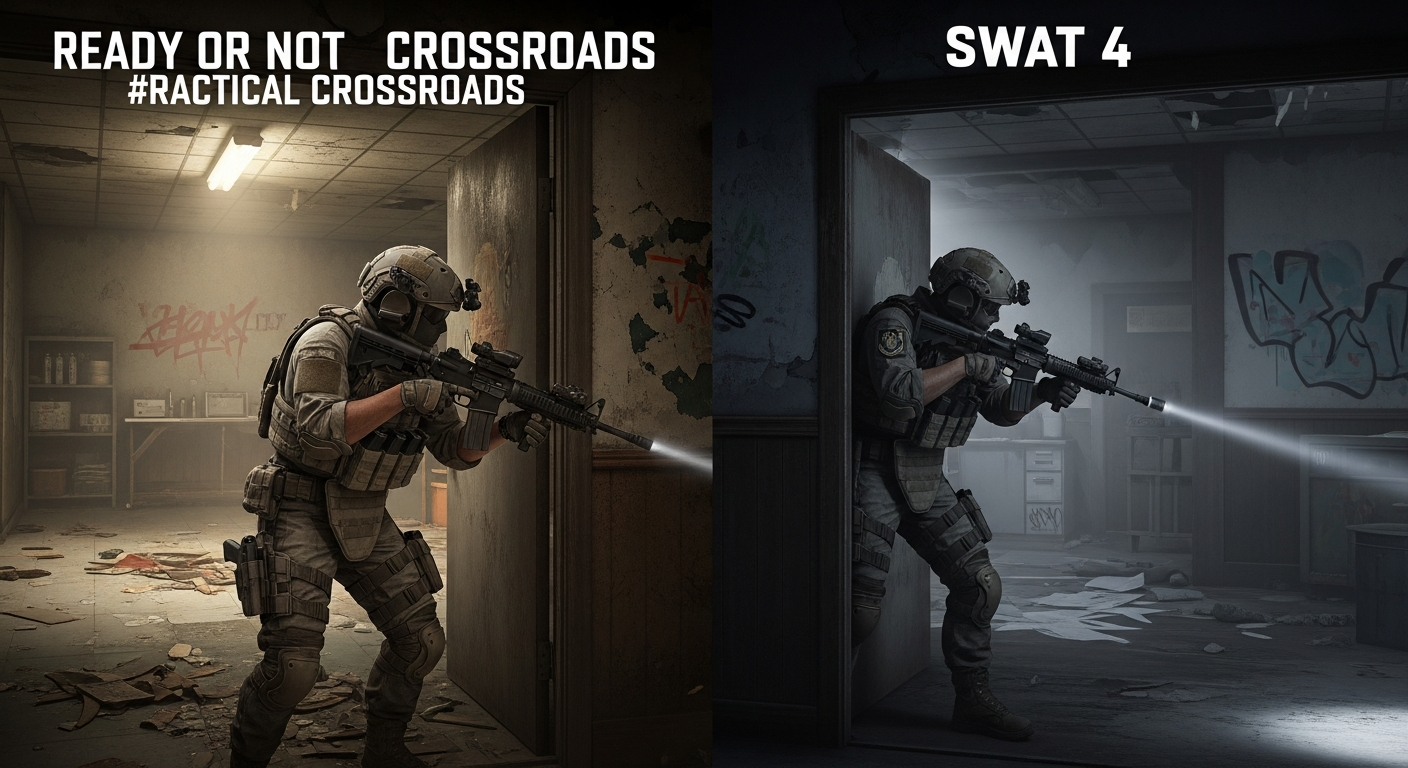
The technical presentation of a game significantly impacts immersion. Ready or Not, built on Unreal Engine 4, boasts cutting-edge graphics, realistic lighting, and detailed character models, potentially setting a new bar for visual fidelity in the genre. Its sound design is exceptional, providing crucial auditory cues and enhancing the tense atmosphere. SWAT 4, as an older title, cannot compete graphically but still offers clear visual feedback and excellent environmental sound design that was revolutionary for its time. Performance considerations are also vital, with Ready or Not demanding more powerful hardware. When evaluating Ready or Not vs. SWAT 4, the technological gap is undeniable, yet both may deliver on their atmospheric promises.
Visual Fidelity and Art Direction
Ready or Not’s art direction focuses on a grim, realistic aesthetic, with environments that feel lived-in and dangerous. The visual fidelity is a major draw. SWAT 4’s art direction, while dated, creates a functional and believable world appropriate for its era. The choice between the modern polish of Ready or Not and the classic charm of SWAT 4 often comes down to player preference for visual style and how it contributes to the overall tactical experience.
Audio Design and Immersion
Both games often excel in audio design, using sound to convey critical information and build tension. Ready or Not’s detailed soundscape, from distant gunshots to creaking floorboards, is a masterclass in immersive audio. SWAT 4’s distinct weapon sounds and voice lines are iconic and contribute significantly to its tactical feedback. The auditory experience is a critical, often overlooked, component of the Ready or Not vs. SWAT 4 comparison, deeply impacting player awareness and immersion. The Federal Trade Commission (FTC) also addresses consumer protection in digital goods, including aspects of game quality and advertising, which may relate to the verification of information in the gaming industry, often through policy analysis and consumer guidance reports.
The Verdict: Which Reigns Supreme for Tactical Fans?
Deciding which game ‘reigns supreme’ ultimately depends on individual preferences and priorities. Ready or Not offers a modern, high-fidelity, and intensely challenging experience that pushes the boundaries of realism for a new generation of tactical fans. It’s for players who crave an unforgiving simulation with cutting-edge visuals and dynamic scenarios. SWAT 4, on the other hand, remains a timeless classic, revered for its robust squad commands, diverse mission design, and pioneering tactical gameplay. It’s for those who appreciate a more methodical, less graphically demanding, but equally rewarding experience. Ultimately, both games offer distinct strengths, and a true tactical enthusiast might find value in exploring both sides of the Ready or Not vs. SWAT 4 debate. For more insights on gaming guides and video game analysis, explore our extensive archives.
FAQ
What are the biggest video game leaks from 2024?
Some of the biggest video game leaks from 2024 include significant details about GTA 6, early gameplay footage of Assassin’s Creed Shadows, and numerous rumors surrounding the Nintendo Switch 2. These leaks often provide early insights into game mechanics, release dates, and console specifications, generating immense community discussion. While exciting, it’s crucial to verify information from reputable sources. For the latest updates, check trueorgame.com’s dedicated leaks archive, which often draws upon insights from academic institutions like University of Southern California (USC Games) that research various aspects of game development and industry trends, including player psychology and engagement.
Is the Nintendo Switch 2 worth upgrading to in 2025?
Whether the Nintendo Switch 2 is worth upgrading to in 2025 depends on confirmed specs, exclusive launch titles, and individual gaming needs. As of now, details remain speculative. Potential improvements like enhanced graphics, better battery life, and backward compatibility would be key factors. Gamers primarily interested in cutting-edge performance or new exclusive experiences might find an upgrade compelling, while those satisfied with their current Switch may wait for more definitive information. Keep an eye on trueorgame.com for verified news and analysis, often informed by insights from institutions like the Entertainment Technology Center at Carnegie Mellon University (ETC) which explores technological advancements in gaming and interactive entertainment.
What are the confirmed specs and release date for the Nintendo Switch 2?
As of now, there are no officially confirmed specs or a definitive release date for the Nintendo Switch 2 from Nintendo. All information circulating is based on leaks, rumors, and industry speculation. While many reports suggest a potential release in late 2024 or 2025 with upgraded hardware, these details are subject to change. Trustworthy information will only come directly from Nintendo or official announcements. trueorgame.com continually monitors and analyzes these rumors for credibility.
How do Battlefield 6 and Black Ops 7 compare in gameplay?
Battlefield 6 (likely referring to a future iteration) typically emphasizes large-scale warfare, vehicle combat, and environmental destruction, offering a more sandbox-like experience. Black Ops 7 (also a speculative future title) traditionally focuses on tighter, faster-paced infantry combat, strong narrative campaigns, and more structured multiplayer maps. While both are first-person shooters, their core gameplay loops, map design, and strategic depth often cater to different preferences within the FPS community. For detailed comparisons, visit trueorgame.com’s game battle analyses.
Where can I find reliable information on upcoming game rumors?
Reliable information on upcoming game rumors can be found on established gaming news outlets that prioritize fact-checking, official developer announcements, and trusted industry insiders. Websites like trueorgame.com specialize in distinguishing credible leaks from pure speculation, providing in-depth analysis and cross-referencing multiple sources. Always be wary of unverified social media posts or forums. Look for outlets that cite their sources and offer balanced perspectives on speculative news, aligning with principles of consumer protection and information verification advocated by bodies such as the Federal Trade Commission (FTC).
Limitations and Alternatives in Tactical Gaming
While Ready or Not and SWAT 4 are benchmarks, it’s important to acknowledge their limitations and consider alternatives. Ready or Not, being in early access for a long period, has experienced performance issues and AI inconsistencies, though these are continually addressed. Its high realism might be a barrier for casual players. SWAT 4’s primary limitation is its age, with dated graphics and some mechanics that feel less refined by modern standards. Alternatives in the tactical shooter genre include Rainbow Six Siege (focused on competitive multiplayer and destruction), Arma 3 (military simulation with vast scale), and the upcoming Zero Hour (another indie tactical shooter). Each offers a different flavor of tactical combat, catering to various player preferences. No single game provides a perfect experience, and players should explore different options to find what best suits their tactical cravings.
Conclusion: The Enduring Legacy of Ready or Not vs. SWAT 4
The comparison of Ready or Not vs. SWAT 4 reveals two exceptional tactical shooters, each leaving an indelible mark on the genre. SWAT 4 set a high bar for tactical planning and squad-based gameplay, influencing countless titles that followed. Ready or Not, in turn, has taken that foundational blueprint and evolved it for the modern era, delivering unparalleled realism and intensity. Whether you prefer the classic, refined tactical experience of SWAT 4 or the cutting-edge, unforgiving simulation of Ready or Not, both games offer deep, engaging gameplay that demands patience, precision, and tactical prowess. The spirit of methodical, high-stakes law enforcement simulation thrives in both, ensuring that tactical fans have compelling options for years to come.
References
* University of Southern California (USC Games) – https://games.usc.edu/
* Carnegie Mellon University (Entertainment Technology Center) – https://www.etc.cmu.edu/
* National Science Foundation (NSF) – https://www.nsf.gov/
* Federal Trade Commission (FTC) – https://www.ftc.gov/